
Blog
Best Berseem Variety in India: How to Choose
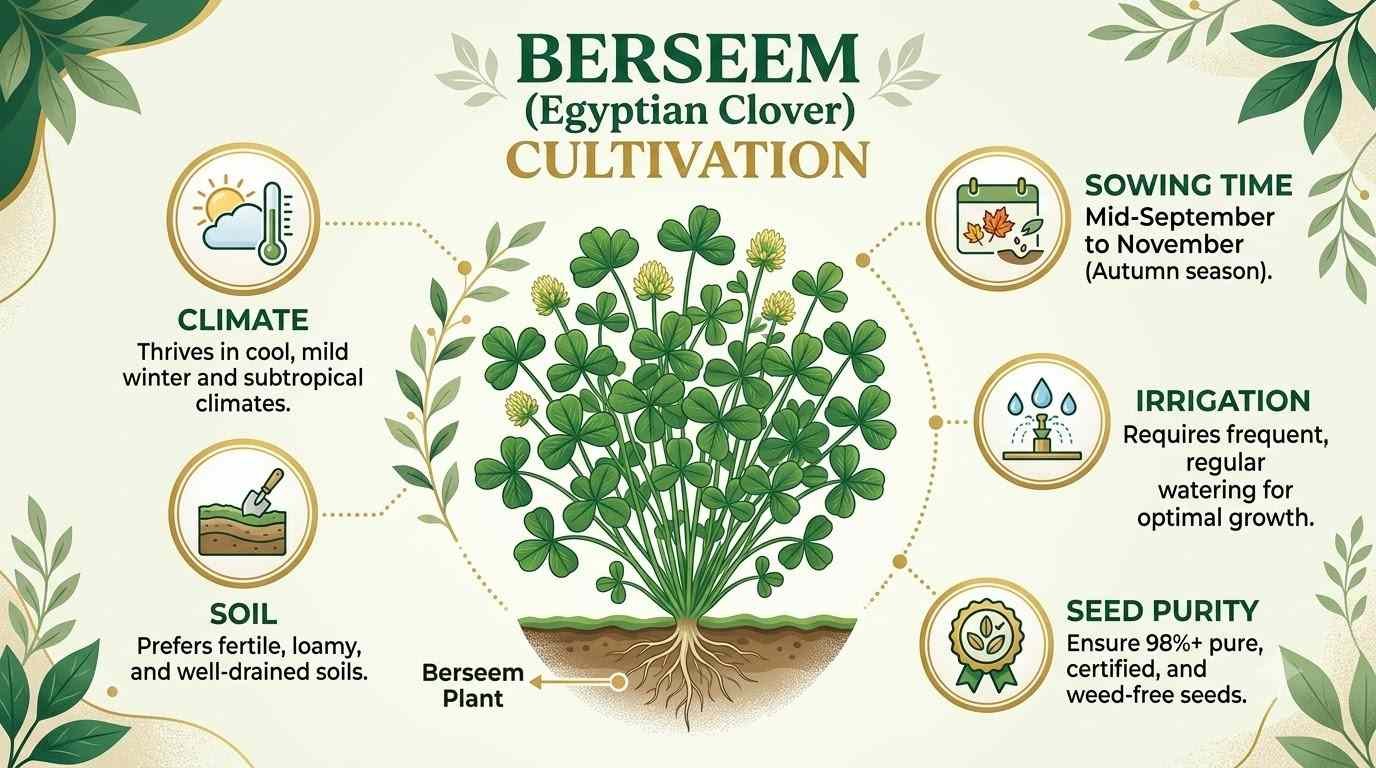
The best berseem variety depends on your region, soil, sowing time and the number of cuts you need. Egyptian types like Mescavi and Wardan give strong multi-cut fodder yield. Improved and hybrid seeds add faster regrowth and better disease tolerance. Choose certified, high-purity seed that suits your local climate.
Introduction
Choosing the right berseem variety is the first big decision of your rabi fodder season. Pick well, and your cattle get lush green fodder for months. Pick badly, and you face thin stands, slow regrowth and wasted money.
Many farmers buy whatever seed is available at the nearest shop. Then they wonder why their neighbour gets one or two extra cuts. The difference is often the variety, not the farming skill.
This guide explains how to choose with confidence. You will learn about common varieties, key traits and the factors that matter most. By the end, you can pick a seed that fits your farm.
Table of Contents
- What Is Berseem and Why Does Variety Matter?
- Berseem Varieties Grown in India
- Egyptian Berseem Clover Seeds: Key Characteristics
- Hybrid Berseem Seeds: Features and Benefits
- WINTER GOLD – Hadu Berseem Grass Seed by Agri Raise
- Factors to Consider When Choosing a Berseem Seed Variety
- How to Choose the Best Berseem Variety for Your Farm (Step by Step)
- Common Mistakes to Avoid
- Frequently Asked Questions About Berseem Varieties
What Is Berseem and Why Does Variety Matter?
Berseem (Trifolium alexandrinum) is a winter fodder legume. It is also called Egyptian clover. Farmers across north and central India grow it during the rabi season.
It is loved for its high protein content and repeated cuttings. It also fixes nitrogen in the soil, which helps the next crop. Dairy farmers value it because it improves milk yield.
Variety matters because berseem types differ a lot. Some regrow faster after each cut. Some tolerate cold better. Some give more leafy, tender fodder. Matching the variety to your farm gives better returns from the same land.
Benefits of Growing Berseem
- Rich, palatable green fodder for cattle, buffalo, goats and sheep
- Several cuttings in one season
- Natural nitrogen fixation that improves soil health
- Lower feed cost for dairy farmers
- Useful as green manure when the last cut is ploughed in
Berseem Varieties Grown in India
Many berseem varieties are grown across India. Most come from research institutes and state agricultural universities. Each has its own strengths.
Here are some widely known names:
- Mescavi (Misqawi): An Egyptian-origin type. It is popular for multi-cut yield in northern regions.
- Wardan: Another well-known type. It is valued for vigorous growth and good fodder quality.
- BL-10, BL-22 and BL-42: Improved varieties from Indian research programmes.
- JB-1, HB-1 and UPB-110: Regional varieties developed for specific zones.
- Pusa Giant: A tall type developed for higher green fodder output.
Performance changes from place to place. A variety that does well in Punjab may behave differently in central India. Always check with your local Krishi Vigyan Kendra (KVK) before buying. The ICAR-Indian Grassland and Fodder Research Institute is also a trusted source for fodder crop research.
Quick Comparison of Berseem Variety Types
|
Type |
Best For |
Main Strength |
|
Egyptian (Mescavi, Wardan) |
North and central plains |
Multi-cut yield, good regrowth |
|
Improved Indian varieties |
Region-specific farming |
Local adaptation |
|
Hybrid / advanced seed |
Farmers wanting higher output |
Vigour and uniform stand |
Egyptian Berseem Clover Seeds: Key Characteristics
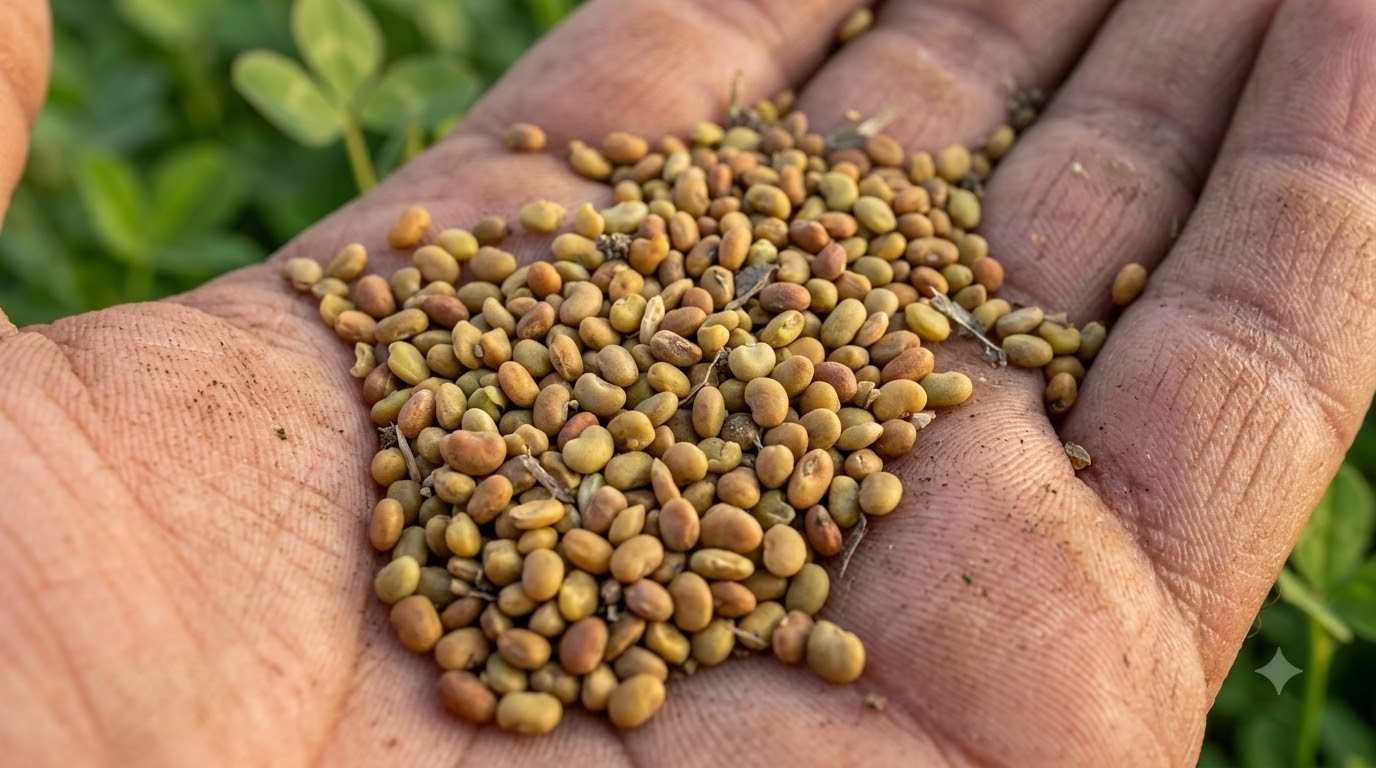
Egyptian berseem clover seeds are the base of Indian berseem farming. The crop originated in the Nile region. That is why it thrives in cool, moist winters.
These seeds are known for fast early growth. They give soft, leafy fodder that animals eat readily. Most types are suited to multiple cuttings.
Key Traits of Egyptian Berseem Seeds
- Quick germination in cool, moist soil
- Soft stems and many leaves, so animals waste less
- Good regrowth after each cutting
- High protein content in green fodder
- Best in well-drained loamy and clay-loam soils
Real-Life Example
Consider a dairy farmer with two acres in Haryana. He sows an Egyptian type in late October. He cuts first at about 50 to 55 days. Then he cuts every 25 to 30 days after that. This steady supply cuts his purchased feed bill noticeably.
Exact cut timing varies with weather and soil. Treat these numbers as a rough guide, not a rule.
Hybrid Berseem Seeds: Features and Benefits
Hybrid or advanced berseem seeds aim to improve on older varieties. Breeders select for stronger growth, better uniformity and higher fodder output. Quality seed companies also focus on purity and germination.
Always ask your seed supplier what "hybrid" means for that product. Terms are used loosely in the market. Look for clear labelling, lot numbers and purity details.
Features of Good Hybrid or Advanced Berseem Seeds
- Uniform germination and an even crop stand
- Faster regrowth after every cutting
- Better tolerance to cold and common stress
- High leaf-to-stem ratio for better feed quality
- Cleaner seed with fewer weed seeds mixed in
Benefits for Farmers
- Higher return per acre: More green fodder from the same land
- Easier management: Even growth makes cutting and irrigation simpler
- Less seed waste: Good germination means fewer gaps to refill
- Better feed quality: Tender, leafy fodder improves animal intake
WINTER GOLD – Hadu Berseem Grass Seed by Agri Raise
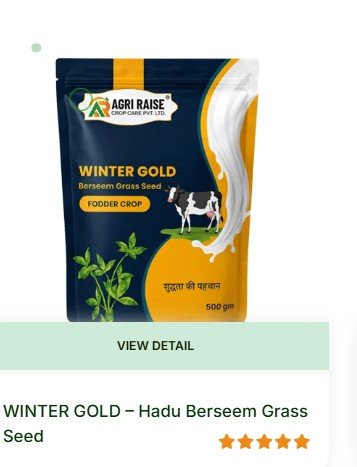
WINTER GOLD – Hadu Berseem Grass Seed is a berseem seed offered by Agri Raise Crop Care Pvt. Ltd. It is designed for farmers who want dependable green fodder through the cold season.
Agri Raise focuses on clean, quality-checked seed. Good seed lowers your risk before you even sow. You can read the full details on the WINTER GOLD Hadu Berseem Grass Seed product page.
Why Farmers Consider WINTER GOLD
- Suited to the rabi fodder season
- Aimed at good green fodder output and regrowth
- Packed and supplied by a dedicated crop care brand
- Fits both dairy farmers and mixed-farming households
Publisher note (delete before publishing): Add verified product facts here, such as seed purity %, germination %, recommended seed rate, pack sizes, expected number of cuts and suitable regions. Do not publish yield claims without field data.
How Much Seed Do You Need?
Seed rate affects stand density and fodder yield. Too little leaves gaps and weeds. Too much wastes seed and money. Read our guide on the berseem seed rate per acre in India for exact numbers and sowing steps.
Factors to Consider When Choosing a Berseem Seed Variety
No single seed wins everywhere. Your land, climate and goals decide the best choice. Check these factors before you buy.
1. Climate and Region
Berseem loves cool weather. Check the winter temperature in your area. Very cold zones need cold-tolerant types. Warmer areas need varieties that handle early heat.
2. Soil Type and Drainage
Berseem grows best in fertile, well-drained loam. Waterlogged fields hurt germination. Mildly saline or alkaline soils need extra care and suitable varieties.
3. Sowing Time
Sowing usually runs from late September to November. Early sowing needs a variety that tolerates warm days. Late sowing needs fast-establishing seed.
4. Number of Cuts Needed
Do you want steady fodder all winter? Choose a strong multi-cut variety. If you plan to use it as green manure, one or two cuts may be enough.
5. Seed Purity and Germination
Poor seed ruins good farming. Check the label for purity and germination details. Buy certified or truthfully labelled seed from a trusted brand.
6. Weed Seed Contamination
Berseem seed is often mixed with chicory (kasni) seeds. This weed spreads fast and lowers fodder quality. Clean seed saves you months of weeding trouble.
7. Irrigation Availability
Berseem needs regular water. Check how many irrigations you can give. Plan this before choosing your sowing date and variety.
8. Purpose of the Crop
Decide your main goal first. It could be fodder, green manure or seed production. Each goal suits a different variety and management plan.
How to Choose the Best Berseem Variety for Your Farm (Step by Step)
Follow these simple steps. They take less than a day and prevent costly mistakes.
- Note your farm details. Write down region, soil type, irrigation and sowing date.
- Set your goal. Decide on fodder, green manure or both.
- Ask local experts. Visit your KVK or agriculture officer. Ask which varieties perform well nearby.
- Talk to nearby farmers. Ask what they grew last season and how many cuts they got.
- Compare two or three options. Check seed purity, germination and price per kilo.
- Buy from a trusted source. Choose a brand with clear labels and batch details.
- Test on a small plot first. If you are trying a new variety, sow a small area before scaling up.
- Record your results. Note cut dates and yield, so next year's choice is easier.
For national guidance on fodder and crop schemes, see the Department of Agriculture & Farmers Welfare.
Common Mistakes to Avoid
- Buying unlabelled, loose seed with no purity details
- Choosing a variety only because it is cheap
- Sowing too early in warm weather
- Ignoring chicory weed seed in the lot
- Skipping soil preparation and levelling
- Copying a neighbour without checking soil and water match
Related Reading on Seeds
If you grow more than one crop, explore our barley seeds for farming in India guide. Barley is another useful rabi crop. It pairs well with a berseem fodder plan.
Frequently Asked Questions About Berseem Varieties
1. Which is the best berseem variety in India?
There is no single best berseem variety for every farm. Egyptian types like Mescavi and Wardan are popular for multi-cut yield. Choose based on your region, soil and sowing time.
2. Which berseem variety gives the most cuttings?
Multi-cut Egyptian and improved varieties usually give the most cuttings. The final number depends on weather, irrigation and sowing date. Good management matters as much as the seed.
3. What are Egyptian berseem clover seeds?
Egyptian berseem clover seeds are types of berseem that originated in the Nile region. They grow fast in cool weather. They give soft, leafy, high-protein fodder.
4. Are hybrid berseem seeds better than normal seeds?
Good hybrid or advanced seeds can give more uniform stands and faster regrowth. Quality and purity still matter most. Always check labels and buy from a trusted brand.
5. When is the best time to sow berseem in India?
Most farmers sow berseem from late September to November. Cool, moist soil helps germination. Early sowing in hot weather can reduce the crop stand.
6. How do I choose the right berseem variety for my farm?
Match the variety to your climate, soil, sowing date and goal. Ask your local KVK for suggestions. Buy clean, high-purity seed from a reliable supplier.
Final Thoughts
Choosing the right berseem variety is a smart investment in your farm. The right seed gives better fodder, healthier animals and lower feed costs. Match the variety to your region, soil and goals.
Start by checking local advice and buying quality seed. Explore WINTER GOLD – Hadu Berseem Grass Seed from Agri Raise Crop Care Pvt. Ltd. Then follow our berseem seed rate per acre guide for a strong sowing start.

Leave a comment


Comments(0)