
Blog
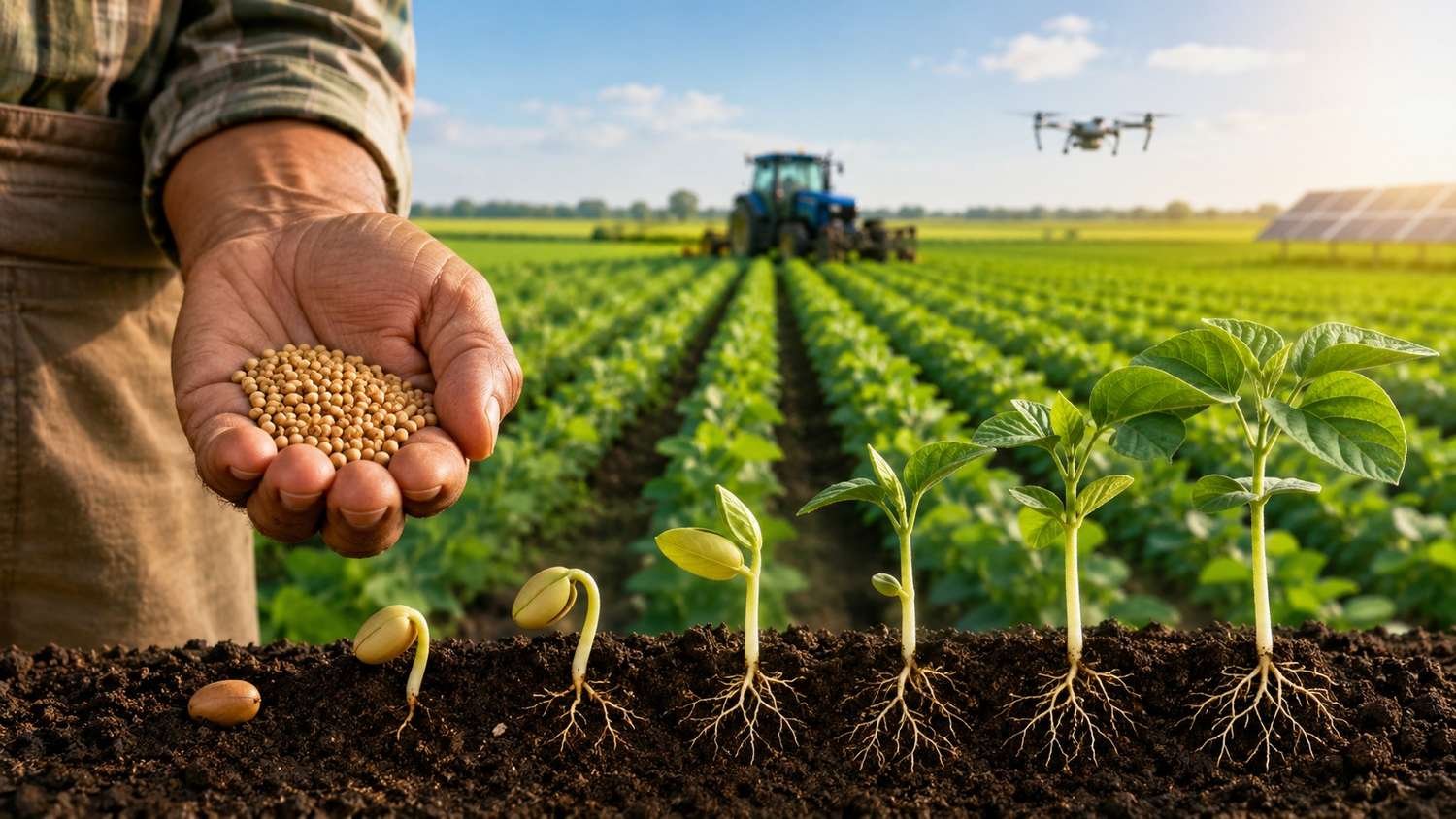
How Good Seeds Increase Farming Production
How Good Seeds Increase Farming Production
Agriculture is essential for food production and global economies. Every successful harvest begins with one essential factor: quality seeds. Farmers invest time and resources in field preparation, crop management, and pest protection.
However, none of these efforts can deliver maximum results if the seeds used are of poor quality.
Good seeds are the starting point of productive farming. They influence germination rates, plant growth, disease resistance, and final crop yield. Choosing certified seeds boosts crop production and profitability.
In today's competitive agriculture, seed quality is more crucial than ever. This article discusses how quality seeds boost farming productivity, making them a vital investment for farmers.
Why Do Farmers Use Good Quality Seeds?
Farmers use quality seeds for healthy crop growth. High-quality seeds are selected and tested for purity, germination, and performance.
When farmers sow healthy seeds, they are more likely to achieve:
- Higher germination rates
- Uniform crop growth
- Better resistance to diseases
- Strong root development
- Improved productivity
- Higher market value produce
Poor-quality seeds often result in uneven germination, weak plants, and lower yields. This can increase production costs and reduce farm income.
What Are the Qualities of Good Seeds?
The success of a crop largely depends on the quality of the seed used. Good seeds possess several important characteristics:
High Germination Rate
A quality seed should germinate quickly and uniformly. High germination ensures that more plants emerge successfully, creating a healthy crop stand.
Genetic Purity
Seeds should be true to their variety. Genetic purity ensures plants exhibit desired traits like yield, disease resistance, and quality.
Physical Purity
Good seeds should be free from weeds, damaged seeds, and other foreign materials.
Disease-Free Nature
Quality seeds are free from diseases that harm crop growth.
High Vigour
Vigorous seeds grow faster and establish healthy seedlings in tough conditions.
Why Are Seeds Important in Farming?
Seeds are the starting point of every agricultural production cycle. Without quality seeds, farmers cannot achieve their desired crop performance.
Seeds play several important roles in farming:
1. Crop Establishment
Seeds determine how well a crop establishes in the field. Strong seedlings are more likely to survive environmental stress.
2. Yield Potential
The genetic potential of a seed directly influences crop productivity.
3. Disease Resistance
Many modern seed varieties are developed with resistance to common crop diseases.
4. Adaptability
Quality seeds can adapt better to local climatic and soil conditions.
5. Sustainable Farming
Healthy seeds contribute to efficient resource utilization and sustainable agricultural practices.
What Are the 5 Functions of Seeds?
Seeds perform several important functions in agriculture:
- Reproduction of plants
- Preservation of genetic material
- Establishment of new crops
- Distribution of plant species
- Survival during unfavorable conditions
These functions make seeds one of the most important components of successful farming.
How Good Seeds Help Increase Crop Production
Farmers invest in certified seeds to boost crop production. Quality seeds contribute to higher yields in several ways.
Better Germination
Higher germination rates result in more plants growing successfully. This improves field population and maximizes productivity.
Strong Root Development
Healthy roots efficiently absorb water and nutrients, resulting in stronger plants and higher yields.
Improved Nutrient Utilization
Quality plants use fertilizers more effectively, improving crop performance and reducing wastage.
Reduced Crop Failure
Disease-resistant seeds reduce the risk of crop losses caused by pests and diseases.
Uniform Crop Growth
Uniform growth allows easier management and more consistent harvesting.
Which Seeds Give More Agricultural Production?
Certified, high-yielding seeds suited to local conditions enhance agricultural production.
Examples include:
- Hybrid seeds
- Certified seeds
- Improved variety seeds
- Disease-resistant seeds
- Climate-adapted seeds
Farmers should always choose seeds that match their region, climate, and crop requirements.
What Is the Role of Seed Quality in Crop Production?
Seed quality influences every stage of crop development.
Germination Stage
Healthy seeds germinate faster and more uniformly.
Vegetative Growth
Quality plants develop stronger stems, roots, and leaves.
Flowering and Fruiting
Healthy crops produce more flowers and fruits, leading to higher yields.
Harvest Quality
Quality seeds often result in superior grain quality, size, and market value.
Seed quality significantly impacts agricultural productivity.
Seed Quality Benefits for Better Farming Yield
The benefits of quality seeds extend beyond crop establishment.
Higher Productivity
Quality seeds help farmers produce more output from the same area of land.
Increased Profitability
Higher yields result in greater income and improved return on investment.
Lower Production Costs
Healthy crops require fewer inputs for disease management and replanting.
Better Crop Uniformity
Uniform crops simplify field management and harvesting.
Improved Market Value
High-quality produce often attracts better prices in the market.
These seed quality benefits make certified seeds a valuable investment for farmers.
How Do Farmers Select Good Seeds?
Selecting the right seed is critical for successful farming.
Farmers should consider the following factors:
Climate Compatibility
Seeds should be suitable for local weather conditions.
Soil Type
Different varieties perform better in specific soil conditions.
Disease Resistance
Choose varieties with resistance to common local diseases.
Germination Percentage
Always check germination rates before purchasing seeds.
Certification
Buy seeds from trusted and certified suppliers.
Yield Potential
Select varieties known for high productivity and performance.
Which Seed Is 100% Pure?
In agriculture, no seed lot can be guaranteed as absolutely 100% pure. Certified seeds are rigorously tested for high genetic and physical purity.
Farmers should buy seeds from reputable, certified suppliers.
Certified Seeds vs Ordinary Seeds
Certified Seeds
- Tested for quality
- Higher germination rates
- Disease-free
- Uniform growth
- Better yield potential
Ordinary Seeds
- Uncertain quality
- Lower germination
- Increased disease risk
- Uneven growth
- Reduced productivity
Certified seeds consistently outperform ordinary seeds in terms of productivity and profitability.
How to Identify High-Quality Seeds
Farmers can identify quality seeds by checking:
- Certification labels
- Germination percentage
- Physical appearance
- Seed size and uniformity
- Supplier reputation
- Packaging information
Avoid seeds that appear damaged, discolored, or contaminated.
The Three Importance of Seeds
The three major importance of seeds are:
Food Production
Seeds are essential for producing crops that feed the global population.
Economic Growth
Agriculture contributes significantly to rural and national economies.
Agricultural Sustainability
Quality seeds support efficient and sustainable farming systems.
Future of Farming Depends on Quality Seeds
Farmers face growing challenges from climate change, pests, and limited resources as agriculture evolves. Quality seeds enhance resilience, productivity, and efficiency.
Seed technology advances help farmers boost yields and use resources efficiently.
Conclusion
Good seeds are one of the most important investments a farmer can make. They offer better germination, stronger plants, disease resistance, and improved yields. Understanding seed quality helps farmers make informed decisions to boost productivity and profitability.
Choosing certified, high-quality seeds is the first step toward successful farming. Investing in quality seeds and proper management helps farmers achieve sustainable growth.
Frequently Asked Questions (FAQs)
Why do farmers use good quality seeds?
Farmers use quality seeds for better germination, stronger plants, higher yields, and improved disease resistance.
What are the qualities of good seeds?
Good seeds have high germination, genetic purity, physical purity, disease resistance, and strong vigour.
How do farmers select good seeds?
Farmers consider climate suitability, soil conditions, certification, disease resistance, and germination percentage.
Why are seeds important in farming?
Seeds are essential for crop establishment, productivity, food production, and sustainable agriculture.
Which seeds give more agricultural production?
Certified, hybrid, and disease-resistant seeds generally provide higher agricultural production and better yields.

Leave a comment


Comments(0)